
Every child who has ever sat in a classroom has been given a number. It is written in a register, saved in a database, and attached to them for years. They do not choose it and rarely know why it exists. When we asked our students about their previous roll numbers, most gave similar responses: we were just given the number. They had never thought about it beyond that.
We did not want that for TWF.
We did not want our students to be auto-generated entries in a database. We wanted the number they carried within TWF to represent something about them, to be intentional rather than assigned. A name or a number is more than administration. It is a marker of identity. Choosing it yourself is one of the earliest forms of self-determination a child can experience inside an educational setting.
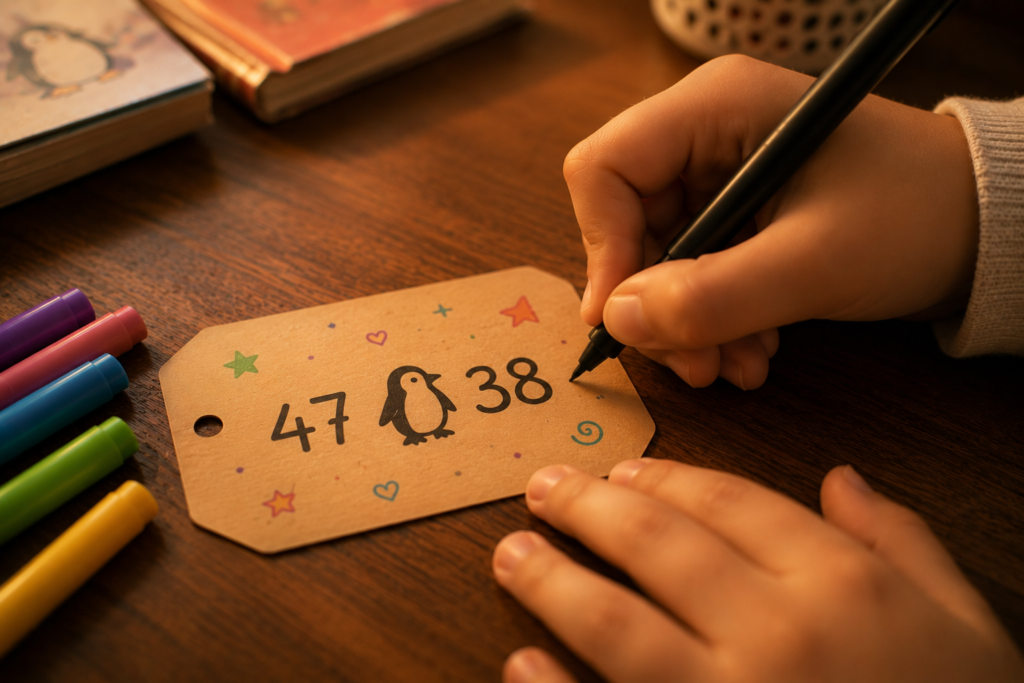
During our welcome sessions, we opened up two opportunities for ownership. The first was a Canva workshop where students designed their own T-shirts, which would later be printed and sent to their homes. The second was the creation of a personalised TWF roll number. Students could choose any number that held significance for them, and that number would remain attached to their journey within TWF.
The reaction was immediate. The children were genuinely surprised. That surprise is worth paying attention to, because it revealed how rarely they had been invited to make a meaningful choice inside a learning environment before. They had never been in a setting where somebody simply said: you decide.
Children are more likely to care about something they helped create than something that was simply handed to them. When children are given that kind of student autonomy in education, something shifts. They thought carefully about something they had never been asked to consider before. They began reflecting on what mattered to them and how they wanted to represent themselves. Some chose numbers connected to family. Some chose dates. Some chose numbers they simply liked. Each choice was different. Each one was personal.
The most meaningful moment came later, and entirely by accident.
As new students joined in small orientation groups, one child who had already attended the session found himself alongside a newcomer who had missed it. Before any facilitator could explain the activity, the student volunteered to do it himself. He explained that the purpose of the roll number was to create something personal, something that represented who you were and what mattered to you. He told the new student that even if somebody else joined with the same name, they would never share the same identity, because this number had been chosen intentionally.
Nobody asked him to explain. He simply wanted to bring his new classmate into something that had meant something to him.
“When a child internalises an idea deeply enough that they want to pass it on, that is not memorisation. That is ownership.”
What we saw was a child who had understood something not just intellectually but personally. He became its ambassador because it mattered to him. That kind of engagement cannot be manufactured through instruction alone. It emerges when a child feels genuinely seen and genuinely involved.
Student autonomy in education in Pakistan is not a common conversation. Most school structures are built around compliance: sit here, open this, answer that. The child’s role is to receive, not to choose. Over years, this trains children to wait for direction rather than exercise judgment. It produces students who are capable of following instructions but hesitant to make decisions independently.
The roll number activity is small. But the principle behind it is not. When children are given genuine choices, even simple ones, they engage differently. They develop a stronger sense of belonging, greater confidence in their own voice, and a deeper investment in the environment around them. Research on identity-safe classrooms points to exactly this conclusion: when children feel recognised as individuals rather than anonymous participants in a system, they show up differently. Students who feel seen tend to participate more, take greater ownership of their learning, and develop stronger connections to their educational environment.
For parents in Pakistan thinking about alternative education, this is worth understanding. The question is not only what a school teaches. It is how the school treats the child as a person. Does the child have a voice? Are they known as an individual? Do they feel that their presence in that space is intentional, not accidental?
Autonomy does not always require a complete redesign of education. Sometimes it begins with a blank space and a simple invitation: choose something that matters to you. More often than not, children do the rest.
The T-shirt they designed. The number they chose. The way they explained it to someone else without being asked. These are not small moments that happen before learning begins. They are part of how learning begins at TWF, by making a child feel that they belong here, that this place was built for them, and that what they bring to it matters.
That feeling does not disappear after the welcome session. It carries forward into every class, every assessment, every difficult moment when a child is working through something hard. A child who feels genuinely invested in their learning environment is a different kind of learner. Not because they are more intelligent, but because they care more about being there.

WhatsApp us